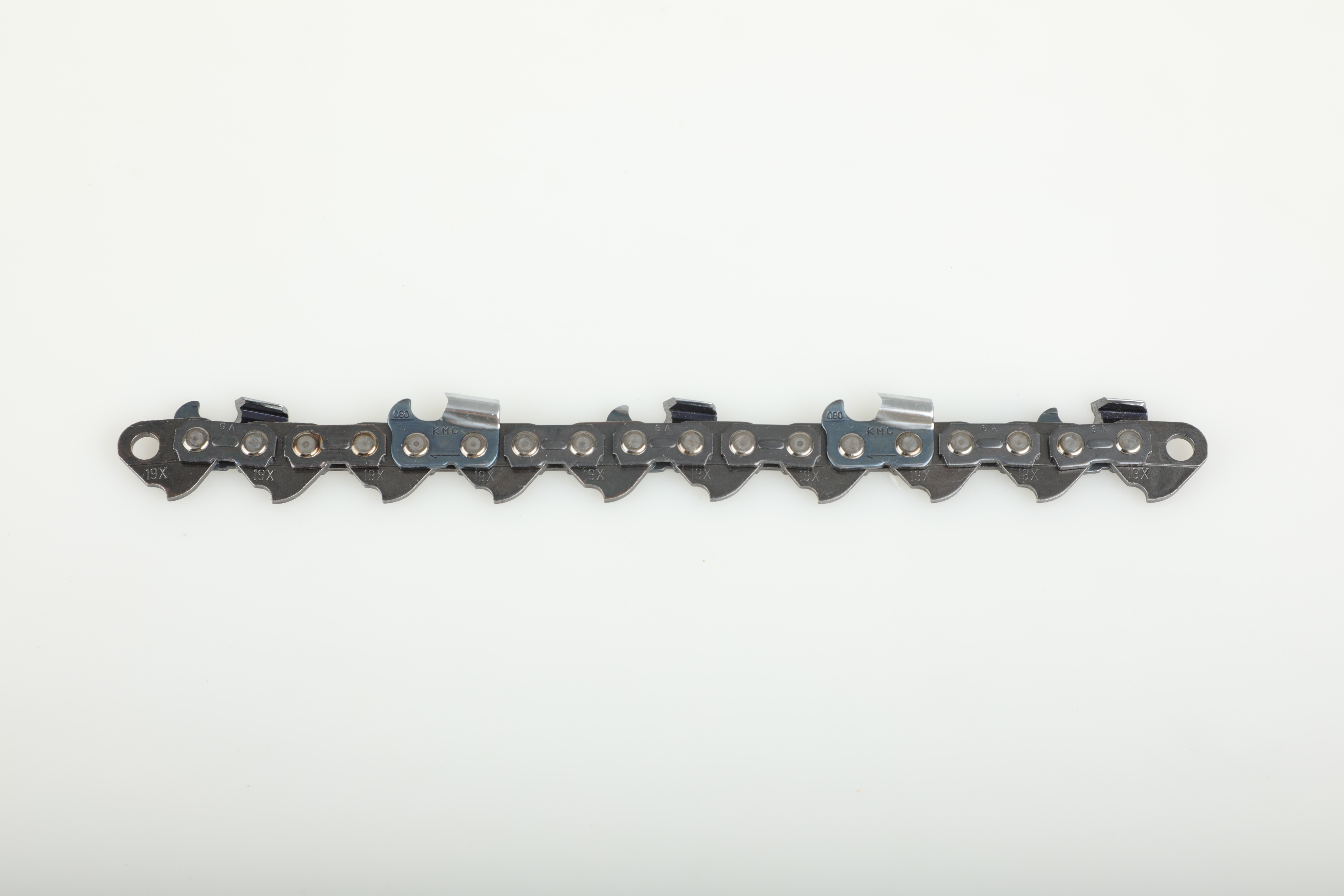
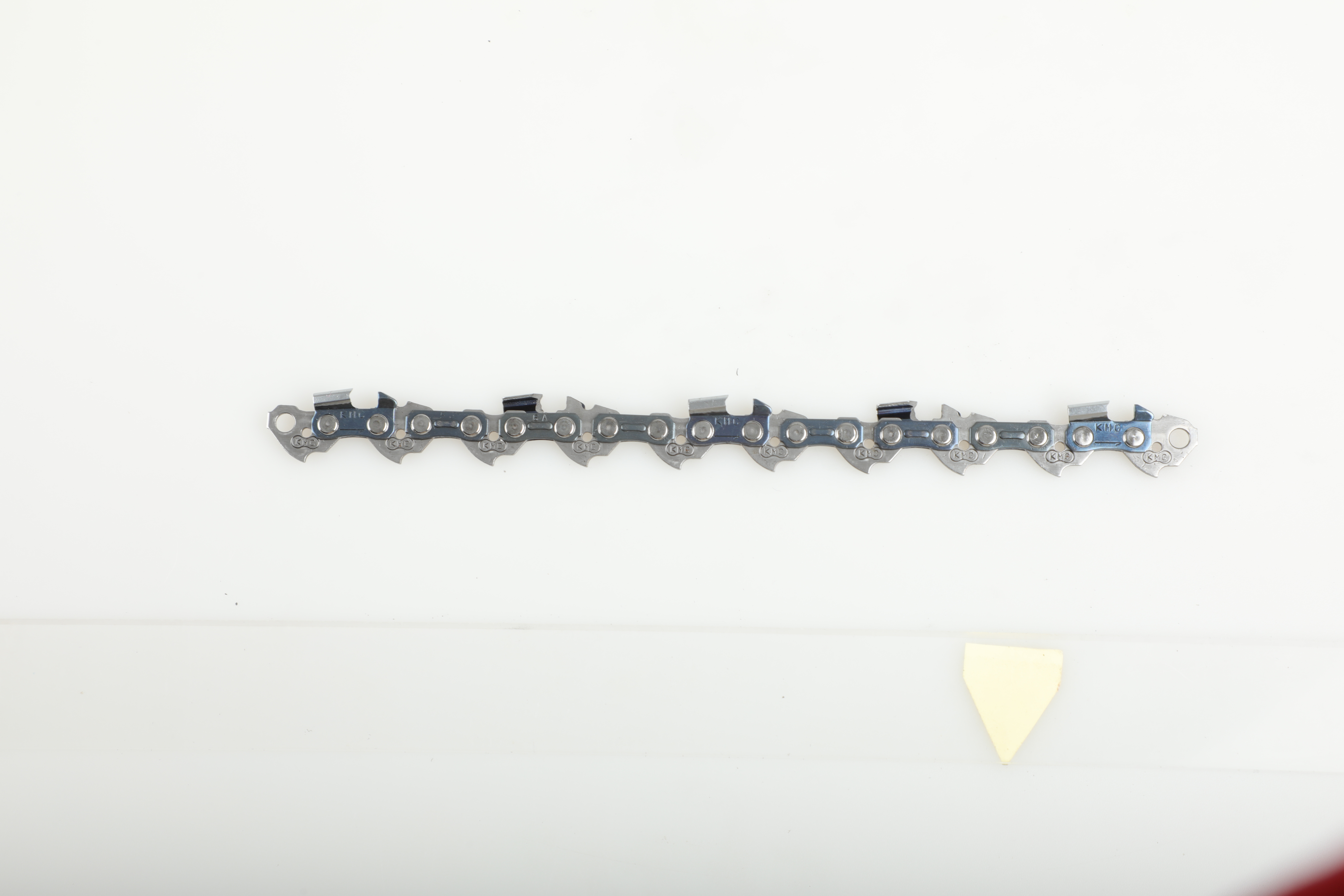
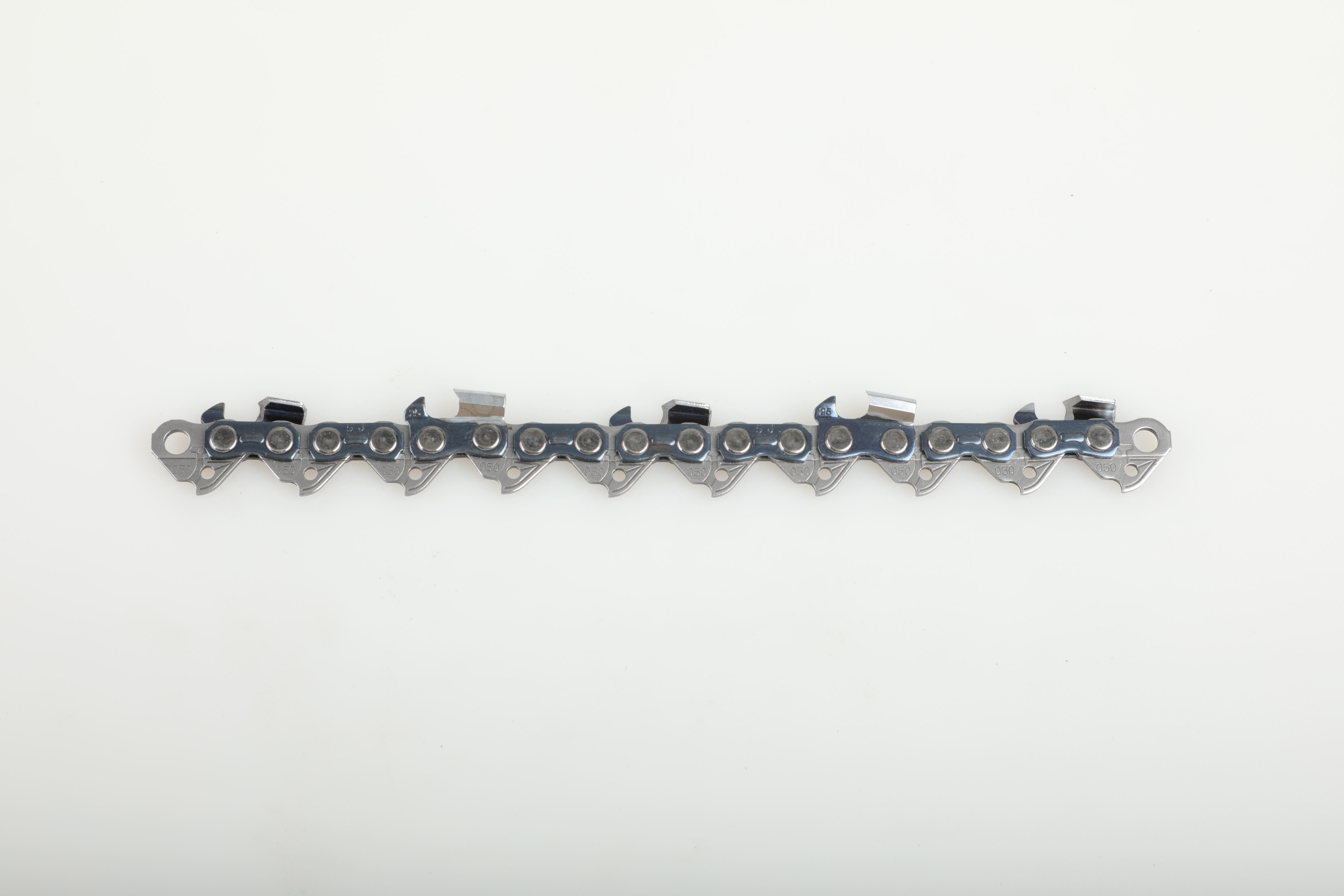
Learning how to choose a chainsaw chain starts with three fit specifications: pitch, gauge and drive-link count. After those values match the saw and guide bar, choose the cutter profile, low-profile or standard construction and application features that suit the work.
Choosing starts with fit, not with cutter appearance. A chain can look similar to the old loop and still use the wrong pitch, a different drive-link thickness or an incorrect number of drive links. Bar length and saw model are useful references, but neither replaces the complete chain size.
Before shopping, create a short identification record for the cutting attachment. Write the saw model, guide-bar reference, nominal bar length, pitch, gauge and drive links on one line. Add a photo of the bar marking when possible. This record helps distinguish the size that is actually installed from the configuration originally sold with the saw. It also makes later reordering easier when several similar loops are stored or serviced together. Keep the record with the saw or maintenance log so the next purchase begins with verified data.
How to Choose a Chainsaw Chain: Step 1 Fit Checks
Pitch identifies the spacing family and must match the drive sprocket and guide-bar nose. Gauge is the thickness of the drive link where it runs in the guide-bar groove. Drive-link count determines the loop length for the actual bar. All three values are required.
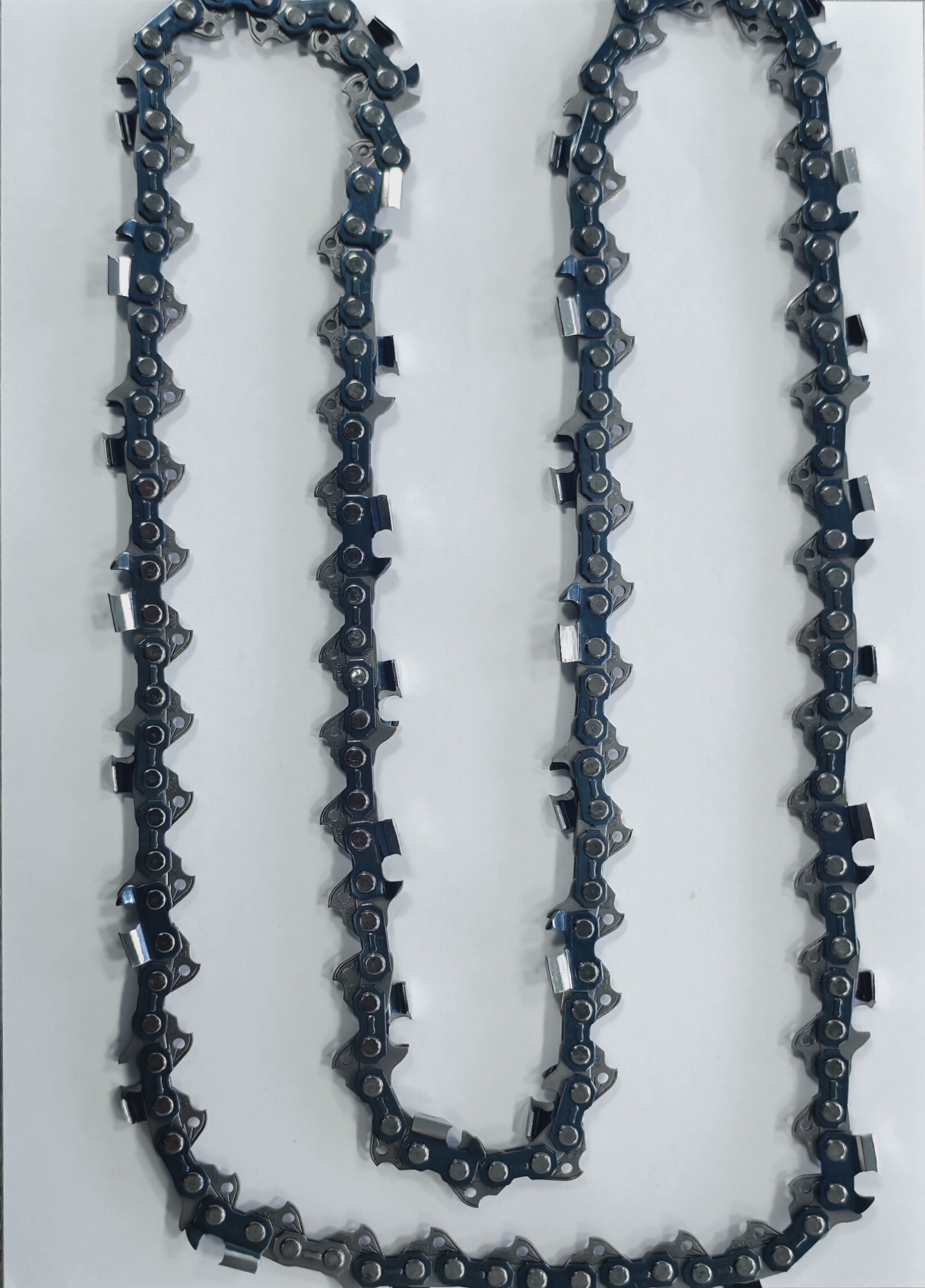
Start with the marked fit specification before comparing cutter types or applications.
Look for the values on the guide bar, in the equipment documentation or on the original chain package. If you count the old loop, count the drive links that run in the groove, not the sharpened cutters. Wear gloves and isolate the saw from its power source before handling the chain.
| Check | Question | Common mistake |
|---|---|---|
| Pitch | Does it match the sprocket and bar-nose system? | Confusing .325, standard 3/8 and 3/8 low profile |
| Gauge | Does the drive link match the bar groove? | Choosing a close-looking thickness |
| Drive links | Is the loop the correct length for this bar? | Using nominal bar length as the count |
Use the chainsaw chain specifications guide for a detailed explanation or consult the chainsaw chain size chart to organize the three values.
Step 2: Confirm Low-Profile or Standard Construction
A pitch name does not always identify the complete chain family. The most important example is 3/8. Standard 3/8 chain and 3/8 low-profile chain belong to different cutting systems and should not be treated as interchangeable.
Low-profile chain is made for compatible lightweight saws, pole saws and pruning equipment. It commonly includes safety-oriented components and compact cutter geometry. Review the 3/8 low-profile chain range only when the saw and bar are designed for that family.
Standard-profile chains cover many general and professional applications and can be offered with different cutter shapes and sequences. Use the chain family specified for the cutting attachment. A product marketed for more demanding work is not an upgrade if it does not fit the sprocket and bar system.
Copy the full pitch description, including “low profile” when marked.
Confirm the guide bar and drive sprocket belong to the same chain family.
Do not mix components because their nominal fractions look similar.
Use only a complete conversion approved for the saw when changing systems.
Step 3: Choose Full Chisel or Semi Chisel
Full-chisel cutters have an angular working corner. They are commonly selected for fast cutting in clean timber and reward precise, consistent sharpening. The edge can lose effectiveness quickly after contact with soil, grit or dirty bark.
Semi-chisel cutters use a rounded working corner. They are often chosen for mixed wood, firewood, farm maintenance, landscaping and field conditions where the edge may encounter some contamination. They still need regular sharpening, but their geometry can be more tolerant.
| Work condition | Likely starting point | Why |
|---|---|---|
| Clean timber and controlled cutting | Full chisel, when compatible | Prioritizes an aggressive clean-wood cut |
| Dirty bark, mixed wood or routine firewood | Semi chisel, when compatible | Prioritizes practical edge tolerance |
| Light pruning with a compatible small saw | Specified low-profile chain | Matches the intended lightweight system |
Cutter profile is not a substitute for a safety classification. A semi-chisel chain is not automatically low kickback, and a full-chisel chain is not described completely by its cutter corner. Review the complete chain design.
Step 4: Match the Chain to Work and Operator Needs
Consider the material before buying. Clean logs, dry firewood, dirty bark, storm debris and pruning expose the edge to different conditions. Inspect the work for soil, stones, wire, nails and other hazards. No cutter profile is intended to make hidden metal or debris safe to cut.
Think about how the chain will be maintained. Full chisel may suit a user who can protect the edge and file its geometry accurately. Semi chisel may suit mixed tasks and field maintenance. A compatible low-kickback chain may be appropriate for equipment designed around that safety-oriented system.
Operator experience does not remove the need for compatible equipment. Follow the saw instructions, use suitable personal protective equipment and maintain a stable cutting position. Kickback can occur with any chain when the bar nose contacts an object or the chain is pinched.
For wholesale purchasing, group demand by exact size and application rather than ordering one “universal” chain. Customers using similar saw models may have changed guide bars, so package labels should display pitch, gauge and drive-link count clearly.
Step 5: Check Condition, Maintenance and Supplier Information
A replacement chain will only perform as part of a serviceable cutting system. Inspect the guide-bar rails and groove, bar-nose sprocket, drive sprocket and oil passages. Repeated derailment, damaged drive links or uneven wear can indicate a problem beyond the chain.
After installation, set tension according to the saw instructions. The drive links should remain correctly seated while the chain moves around the bar. Recheck tension after initial running and as operating temperature changes. Confirm that chain oil reaches the cutting attachment.
Sharpen with the correct file size and guide. Keep all cutters consistent and check depth gauges with the specified tool. Filing depth gauges too low can change chain behavior. Replace cracked straps, loose rivets, distorted drive links or severely damaged cutters rather than relying on an improvised repair.
When comparing suppliers, look for complete product identification and clear answers about pitch, gauge, drive links, cutter profile and packaging. The KMC chainsaw chain product range can be used to organize compatible options after the size is confirmed.
Photograph or record the guide-bar markings.
Write the three fit values on the order.
Add low-profile/standard and cutter preference.
State the saw, wood and application.
Check the received package against the written specification before installation.
Frequently Asked Questions
Can I choose a chain using only the chainsaw model?
The model is useful, but some saws accept more than one approved bar or cutting setup. Confirm the pitch, gauge and drive-link count for the bar actually installed before ordering.
Can I choose a chain using only guide-bar length?
No. Bars with the same nominal length can use different pitch, gauge or drive-link counts. Use the bar marking, equipment documentation or a verified count from the correct existing loop.
Should I choose full chisel or semi chisel?
Choose full chisel for compatible systems where clean-wood cutting and precise maintenance are priorities. Choose semi chisel for compatible systems where mixed conditions and edge tolerance matter. Fit specifications come first.
How do I know whether a chain is low profile?
Read the complete chain and bar designation. Do not identify low profile from the 3/8 pitch label alone. Standard 3/8 and 3/8 low profile are different systems.
Why will a new chain not tension correctly?
Recheck drive-link count, pitch, gauge, bar seating and tensioner position. Do not force or modify the chain. If the specification is correct, inspect the bar, sprocket and tensioning components according to the saw instructions.
Conclusion: Knowing how to choose a chainsaw chain means following a fixed order: pitch, gauge, drive links, chain family, cutter profile and application. Verify the installed cutting system, select a design suited to the wood and maintain the entire attachment rather than treating the chain as an isolated part.
If the markings or current configuration are unclear, contact KMC with the saw model, bar photos and drive-link count before ordering.