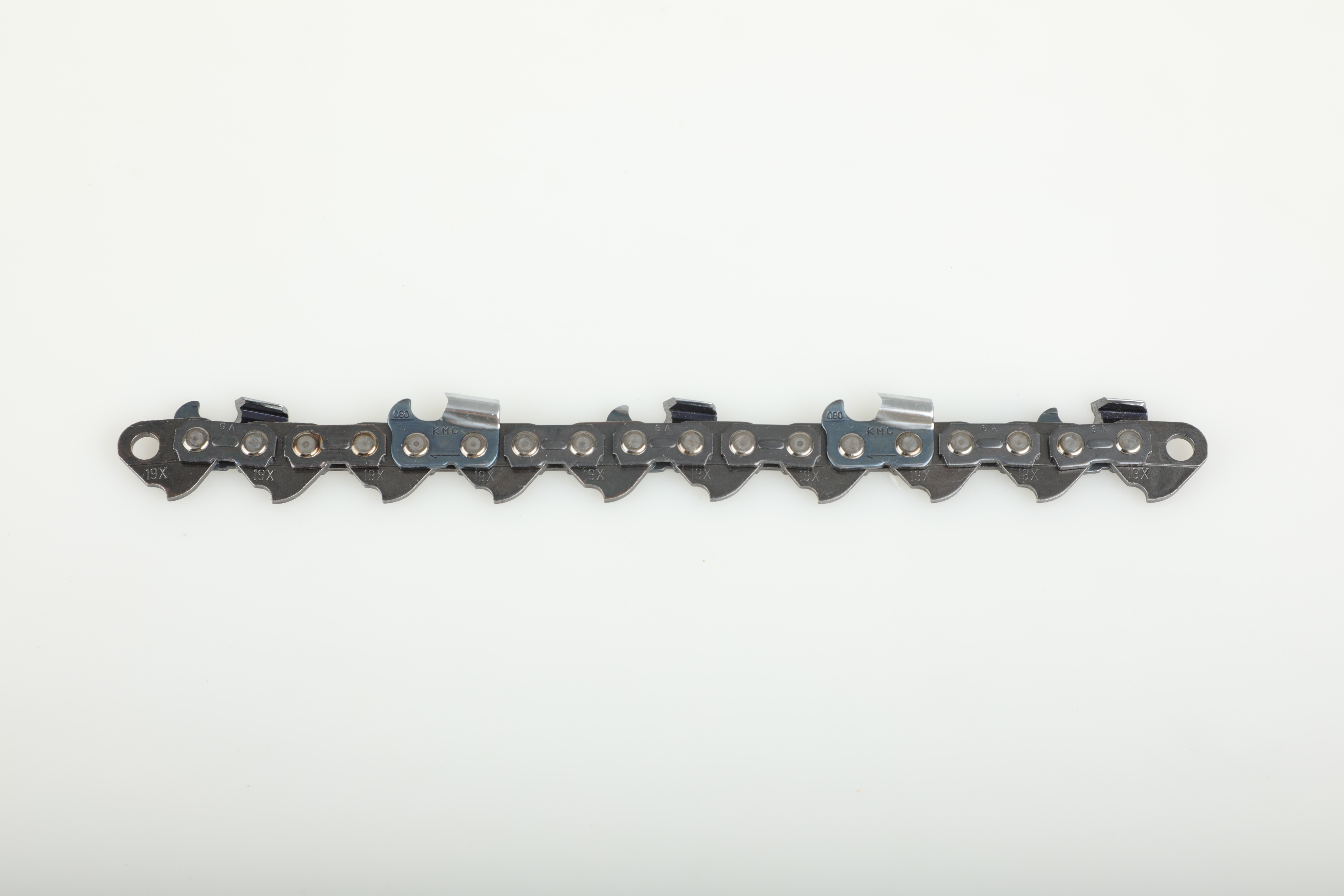
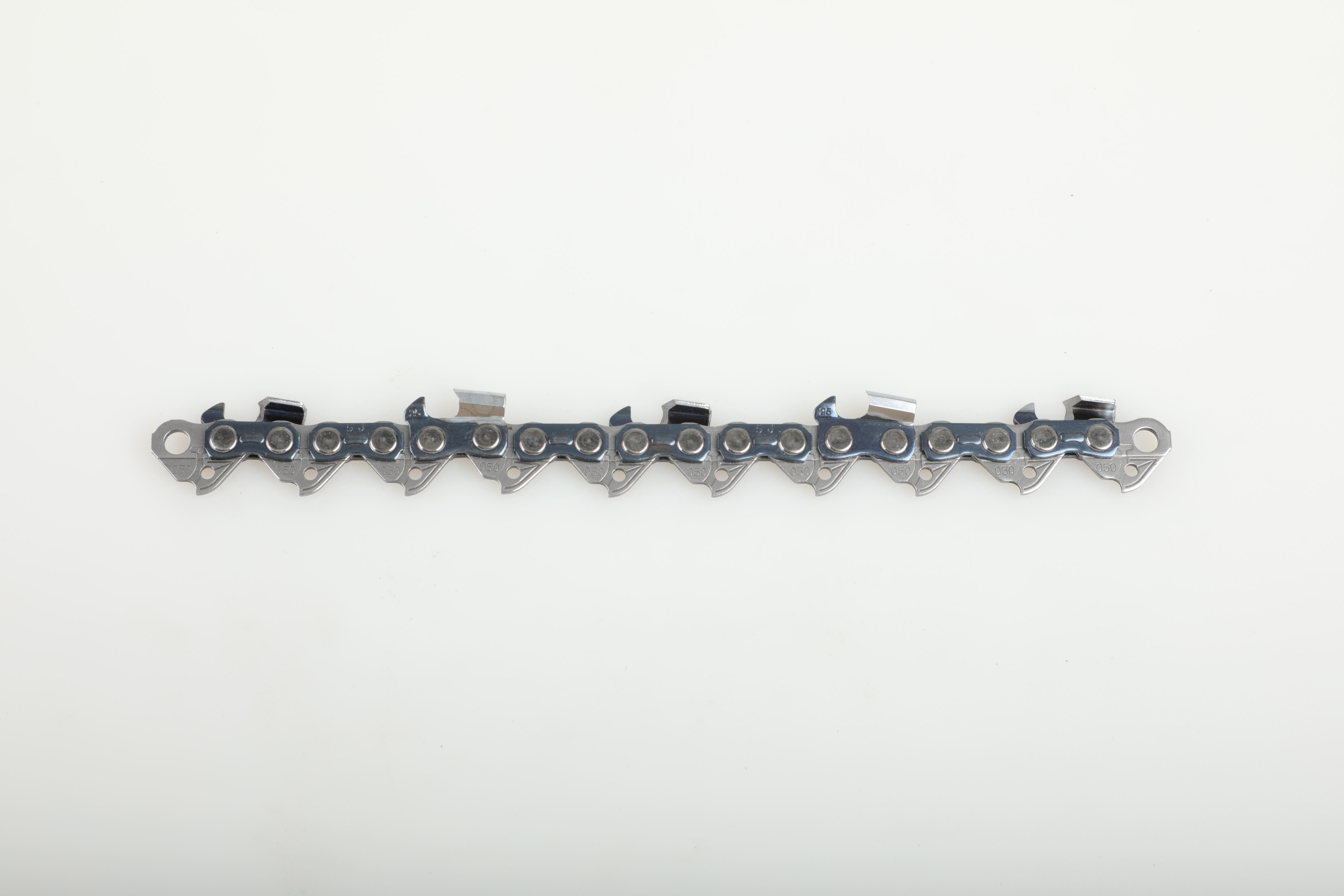
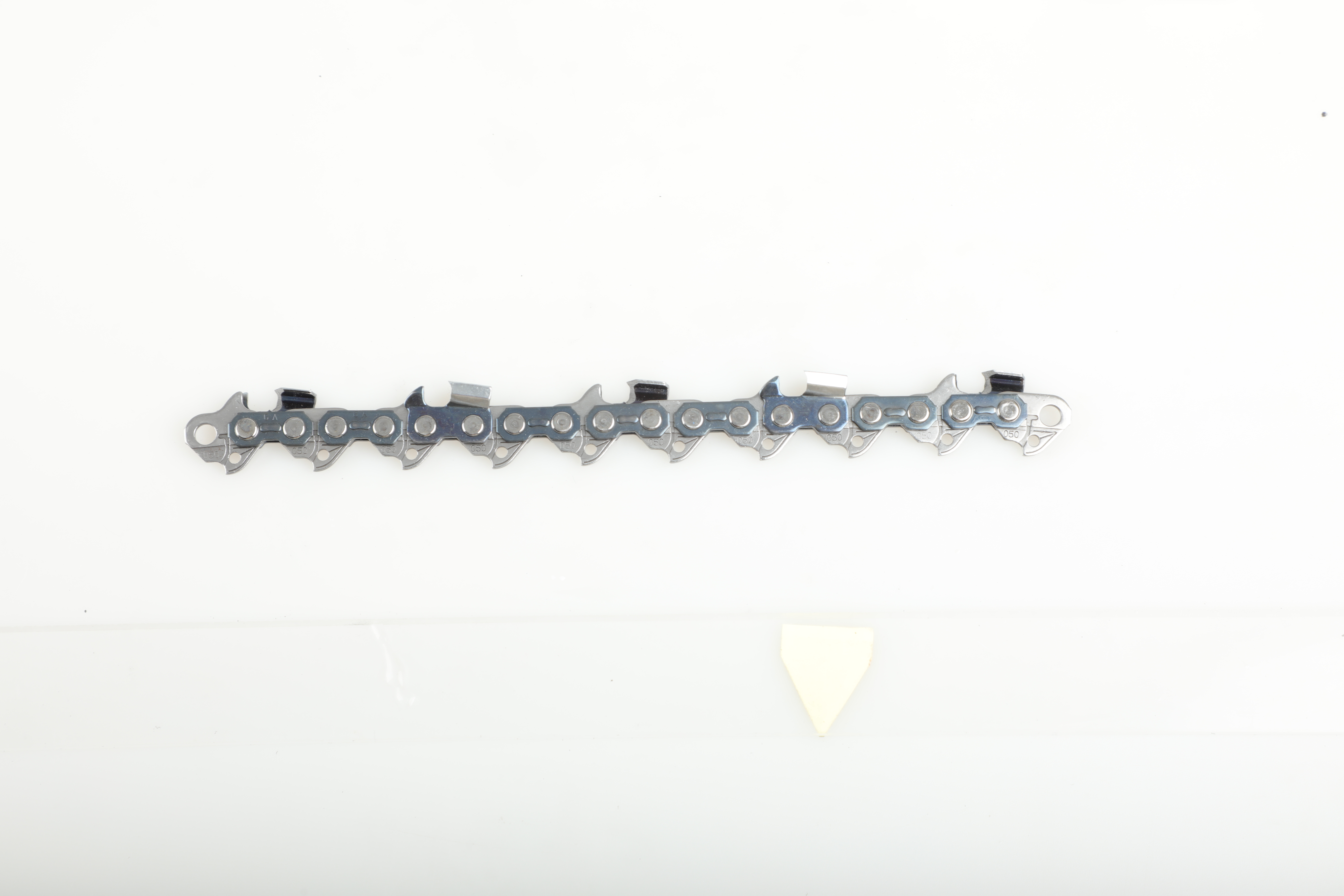
The full chisel vs semi chisel decision is mainly a choice between two cutter-corner shapes. Full-chisel cutters use a more angular working corner and are selected for fast cutting in relatively clean wood. Semi-chisel cutters have a rounded working corner and are often chosen for edge tolerance, mixed conditions and practical maintenance.
The better cutter depends on wood condition and maintenance, not on a simple claim that one design is always superior. Both profiles still need the correct pitch, gauge and drive-link count, and both must be sharpened, tensioned and lubricated according to the chain and saw instructions.
Full Chisel vs Semi Chisel at a Glance
| Comparison | Full chisel | Semi chisel |
|---|---|---|
| Cutter corner | Angular | Rounded |
| Typical priority | Fast cutting in clean wood | Consistent use in mixed conditions |
| Dirty or abrasive wood | The sharp corner can lose effectiveness quickly | The rounded corner is often more tolerant |
| Sharpening | Rewards precise, consistent filing | Often easier to maintain for varied work |
| Common users | Experienced operators in controlled wood conditions | Home, farm, landscaping and professional mixed-condition work |
This comparison describes cutter profile only. A full-chisel chain and a semi-chisel chain are not interchangeable unless all fit specifications and the cutting-system requirements also match.
When comparing two physical chains, use the package or stamped specification rather than the apparent size of the cutter. A sharpened chain may have shorter cutters than a new loop, and different manufacturers may shape non-cutting areas differently. The required pitch, gauge and drive-link count remain the dependable fit data. Cutter profile should be treated as the application choice made after those dimensions are confirmed.
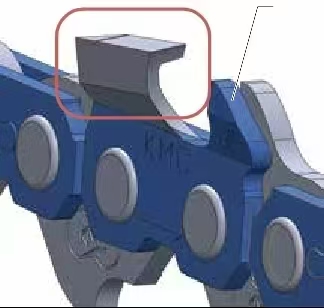
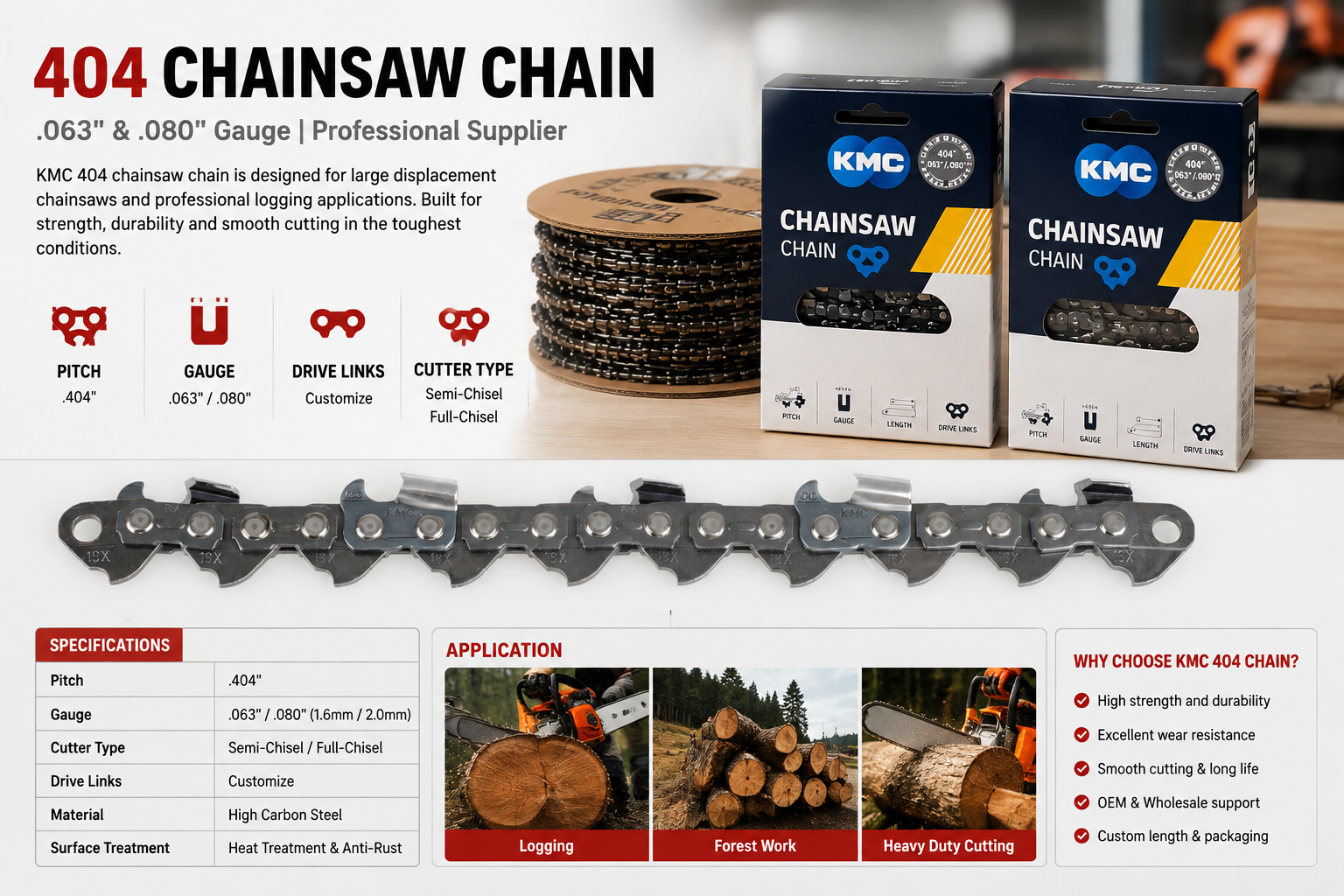
Full-chisel cutters use a more angular working corner for clean-wood cutting.
How Cutter Geometry Changes the Cut
A cutter removes wood through the relationship between its top plate, side plate, working corner and depth gauge. The corner shape influences how the cutting edge enters and separates wood fibers. It does not change the need for correct depth-gauge maintenance or a compatible bar and sprocket.
Full-chisel geometry
The angular corner creates a sharp intersection between the top and side cutting surfaces. In clean timber, a properly sharpened full-chisel chain can take an efficient cut and is often selected for production work. The edge needs consistent filing angles and similar cutter lengths on the left and right sides.
Because the working corner is distinct, abrasive contact can affect performance quickly. Hitting soil at the base of a log, cutting dirty bark or contacting grit may create an immediate need for sharpening. Operators who choose full chisel should be able to protect the chain from contamination and service it accurately.
Semi-chisel geometry
The semi-chisel cutter uses a rounded transition at the working corner. It is often less sensitive to small amounts of dirt or mixed wood conditions. That makes it a practical choice for firewood, storm cleanup, farm maintenance, landscaping and forestry where every log cannot remain perfectly clean.
The rounded shape does not mean the chain can be used when dull or damaged. Semi-chisel cutters still need correct sharpening, balanced lengths and depth-gauge maintenance. Their advantage is a different balance of cutting behavior and edge tolerance, not freedom from service.
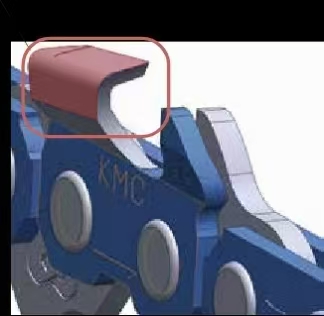
Semi-chisel cutters use a rounded working corner that suits mixed cutting conditions.
Wood Conditions and Edge Durability
Clean wood favors the full-chisel edge because the sharp corner can work without repeated abrasive contact. Logs lifted clear of the ground, clean felling cuts and controlled processing are typical situations where the operator may value cutting rate.
Dirty bark, skidded logs, wind-thrown timber and firewood stored on the ground can carry soil and grit. Semi chisel may retain useful cutting behavior longer in these conditions, but the material should still be cleaned where possible. Neither cutter is designed to cut stones, wire, nails or hidden metal.
Wet or frozen conditions also influence maintenance and handling, but they do not create a universal rule. Observe chip production, feed pressure and edge condition. If a full-chisel chain needs frequent touch-ups during a particular job, semi chisel may reduce service interruptions. If timber remains clean and sharpening is controlled, full chisel may better match the production goal.
Clean logs: full chisel is often preferred for cutting speed.
Dirty bark or soil exposure: semi chisel is often more practical.
Mixed farm and property work: semi chisel offers versatility.
Controlled professional processing: full chisel may suit an experienced crew.
Unknown material: inspect and clean it before selecting or operating any chain.
Kickback, Handling and Chain Profile
Cutter shape can influence how a chain engages wood, but “full chisel” or “semi chisel” is not a complete safety classification. Low-kickback features may involve depth gauges, bumper links and the overall chain profile. A semi-chisel cutter is not automatically a certified low-kickback chain, and a full-chisel label does not describe every component in the loop.
Kickback can occur when the upper guide-bar nose contacts an object or when the chain is pinched and drives the saw toward the operator. Chain selection cannot eliminate this hazard. Use a chain and bar approved for the saw, keep all safety features intact, follow correct technique and wear appropriate protective equipment.
Depth gauges should be maintained with the correct tool and setting. Filing them too low can increase cutter engagement and make chain behavior more aggressive. Do not grind away bumper links or modify the cutter in an attempt to change the profile.
How to Choose and Maintain the Right Cutter
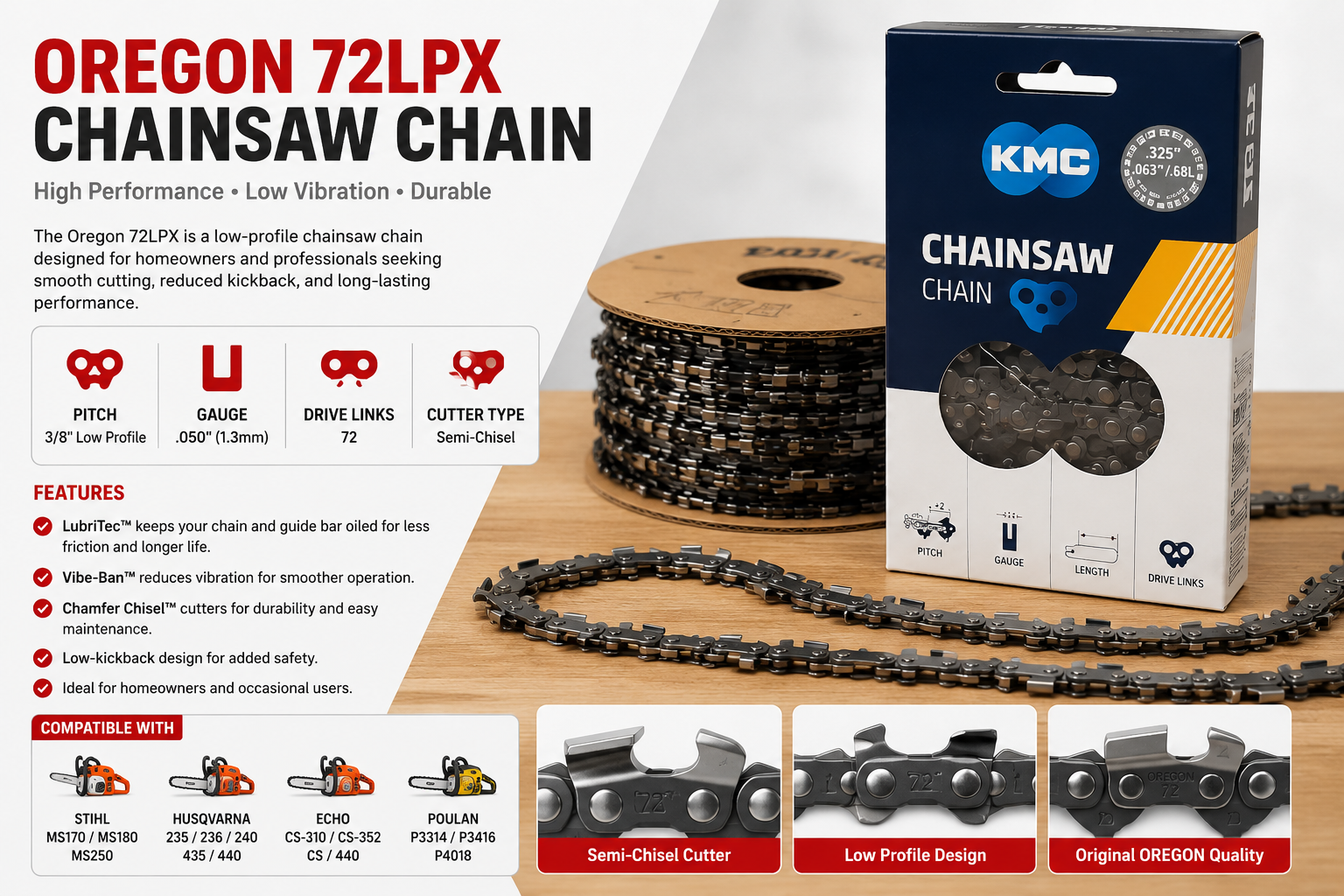
Start by identifying the chain size. Product families such as .325 chain and standard 3/8 chain can include different cutter options. Match pitch, gauge and drive-link count to the actual bar and sprocket before selecting the cutter.
Confirm fit: record pitch, gauge and drive links.
Assess wood: decide whether it will remain clean or contain dirt and grit.
Set the priority: choose cutting rate or edge tolerance based on the job.
Assess maintenance: make sure the correct files and guides are available.
Follow the saw specification: use an approved chain and cutting attachment.
For sharpening, use the file size and angles specified for the chain. File all cutters consistently and avoid shortening one side more than the other. Check depth gauges with the correct guide. Clean the bar groove and oil passages, inspect sprocket wear and set chain tension as directed by the saw maker.
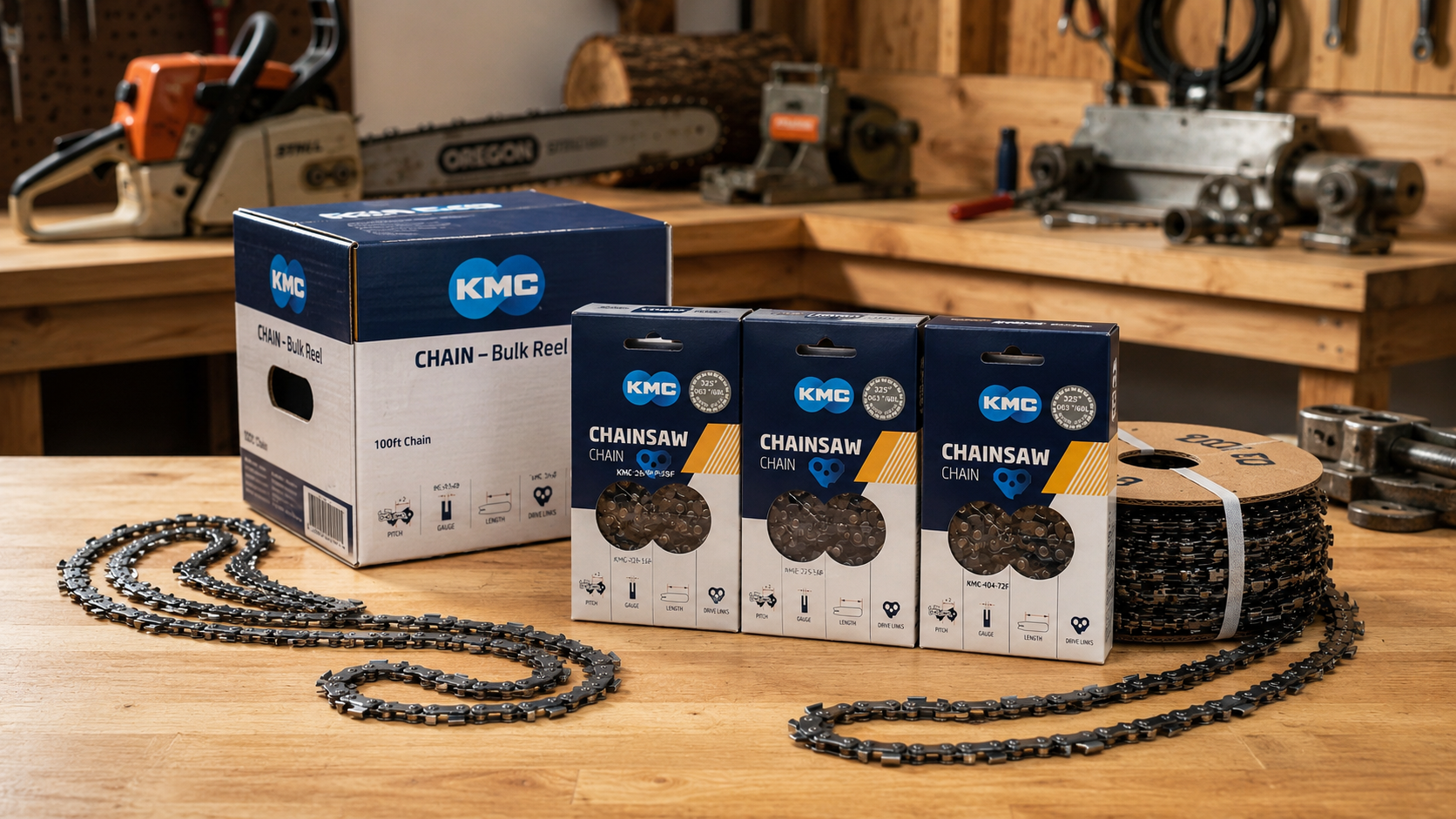
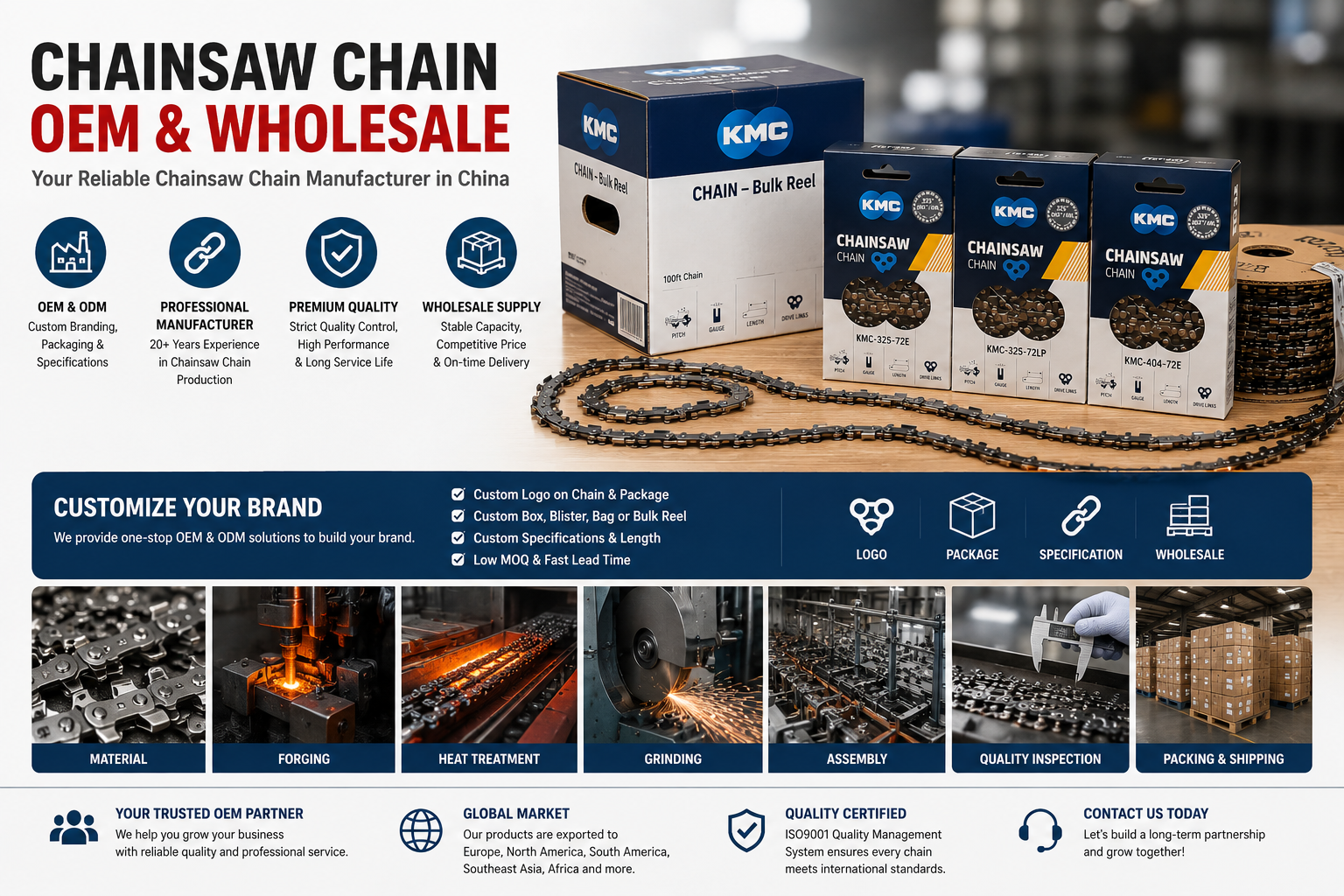
A retailer or distributor may stock both cutter profiles because customer conditions differ. Keep packages clearly identified by cutter type and complete size. The KMC chainsaw chain range can be reviewed by pitch and application, while OEM and wholesale options support planned assortments and private-label packaging.
Frequently Asked Questions
Does full chisel cut faster than semi chisel?
In clean wood and with correct sharpening, full chisel is generally selected for a faster, more aggressive cut. Real productivity still depends on wood contamination, operator technique, chain condition, saw setup and time spent maintaining the edge.
Does semi chisel stay sharp longer?
The rounded working corner is often more tolerant of dirty bark and mixed conditions, so semi chisel may retain useful performance longer in that environment. It still becomes dull after abrasive contact and requires correct sharpening.
Is semi chisel safer than full chisel?
Cutter profile alone does not establish the safety classification of the complete chain. Review the low-kickback design, depth gauges, bumper links and equipment compatibility. Safe operating technique and protective equipment are required with both profiles.
Can I replace full chisel with semi chisel?
Only when the replacement is offered for the compatible cutting system and matches pitch, gauge and drive-link count. Confirm the saw and bar requirements rather than assuming that matching cutter length or appearance is enough.
Which cutter is better for firewood?
Semi chisel is often practical for firewood when logs are dirty, mixed or handled near the ground. Full chisel can suit clean wood when cutting speed and precise sharpening are priorities. The correct chain size remains mandatory.
Conclusion: The full chisel vs semi chisel choice is a balance between an angular cutter for fast clean-wood cutting and a rounded cutter for mixed-condition tolerance. Select the profile after confirming pitch, gauge and drive links, then maintain cutters and depth gauges to the chain specification.
To compare available cutter options for a confirmed chain size, contact KMC with the saw, bar markings, drive-link count and intended wood conditions.